Science operations
Research also supports the planning and interpretation of mission observations, including the LUMIO Science Operations Centre and the Milani Navigation Experiment Operations Centre.

DART investigates the dynamics of spaceflight and develops methods for autonomous exploration. Our research spans mission design, spacecraft guidance and navigation, and the physical processes that shape small bodies. We combine mathematical models and numerical simulations with laboratory experiments to study challenging environments and test the systems needed to operate within them. Applications include interplanetary transfers, cislunar missions, close-proximity operations, and surface exploration.
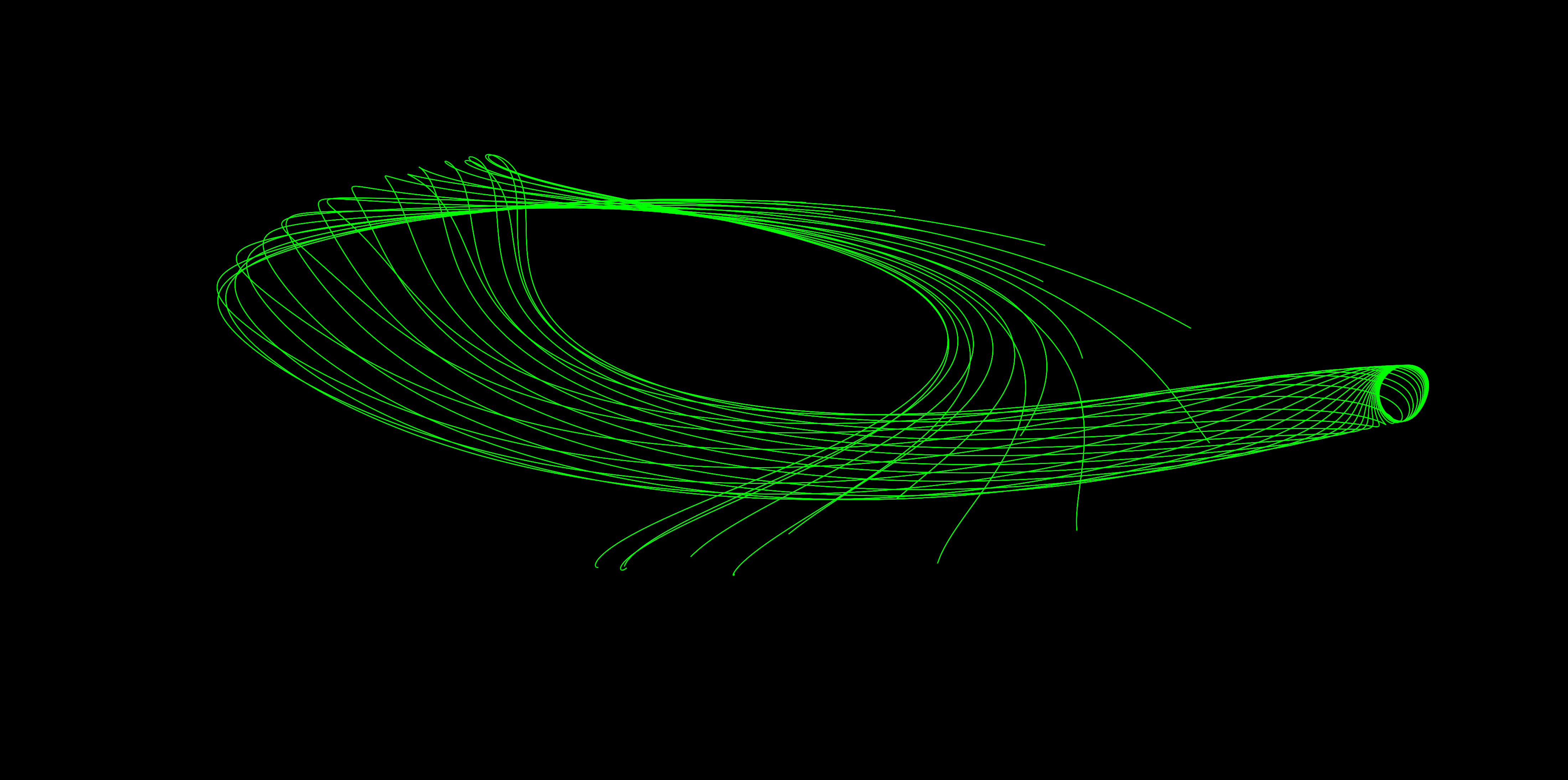
The gravitational environments of the Solar System offer opportunities for efficient spaceflight, but also create demanding trajectory-design problems. We investigate nonlinear dynamics and develop optimisation methods for missions with limited propulsion and complex operational constraints. Our work covers interplanetary transfers, motion in the Earth–Moon system, and trajectories near small bodies.
DART develops trajectory-optimisation tools including DIRETTO, based on direct collocation, and the LT2.0 low-thrust optimiser.
Autonomous spacecraft must determine their motion and adapt their trajectory with limited support from Earth. We develop guidance, navigation, and control methods for different mission phases, accounting for uncertain dynamics, imperfect measurements, and onboard computing constraints. Optical observations provide navigation information across distances, from unresolved celestial bodies to surface features visible during close approach.
Navigation strategies change with viewing geometry and the information available in the images. Guidance and control use the estimated state to update spacecraft actions.
Small bodies preserve information about the history of the Solar System and present unusual environments for exploration. We study how local material properties and particle interactions influence their large-scale behaviour. The work combines theoretical models, numerical experiments, and physical testing to investigate asteroid dynamics and the interaction between spacecraft and low-gravity surfaces.
These activities support scientific exploration and planetary defence, while informing the design of surface operations and instruments.
All 174 papers in this area → Planetary defence papers (55) →
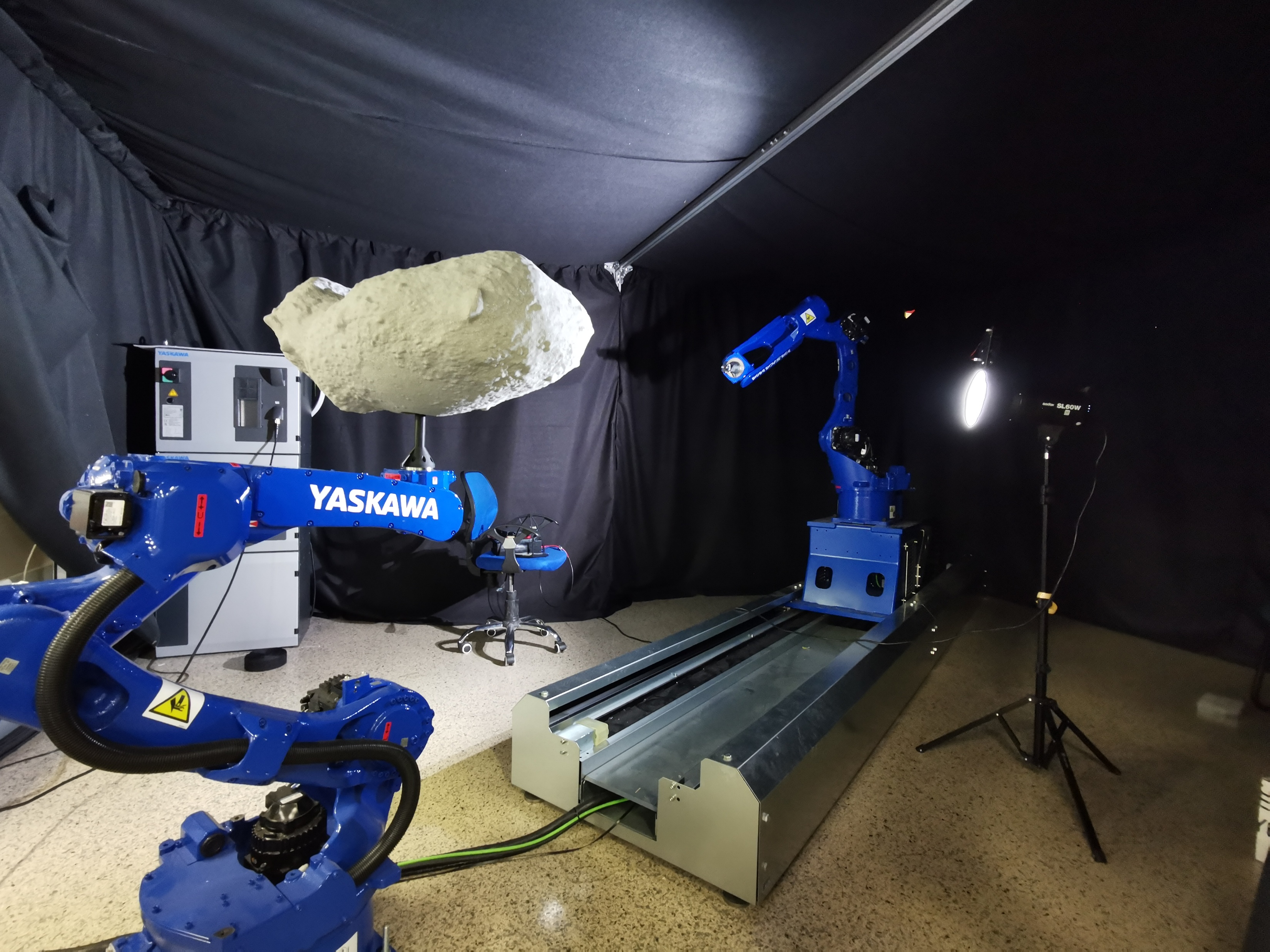
Representative testing connects algorithm development to the behaviour of real sensors and hardware. We combine numerical simulation with physical test environments to investigate spacecraft motion, sensing, and control. Hardware-in-the-loop experiments allow GNC systems to interact with real components while a simulated mission supplies the surrounding dynamics.
The Facilities page provides further information on the experimental infrastructure supporting this research.
Research also supports the planning and interpretation of mission observations, including the LUMIO Science Operations Centre and the Milani Navigation Experiment Operations Centre.
Space-system modelling and cyber-range environments support the study of threats, onboard threat identification, and cybersecurity exercises involving simulated and physical system components.